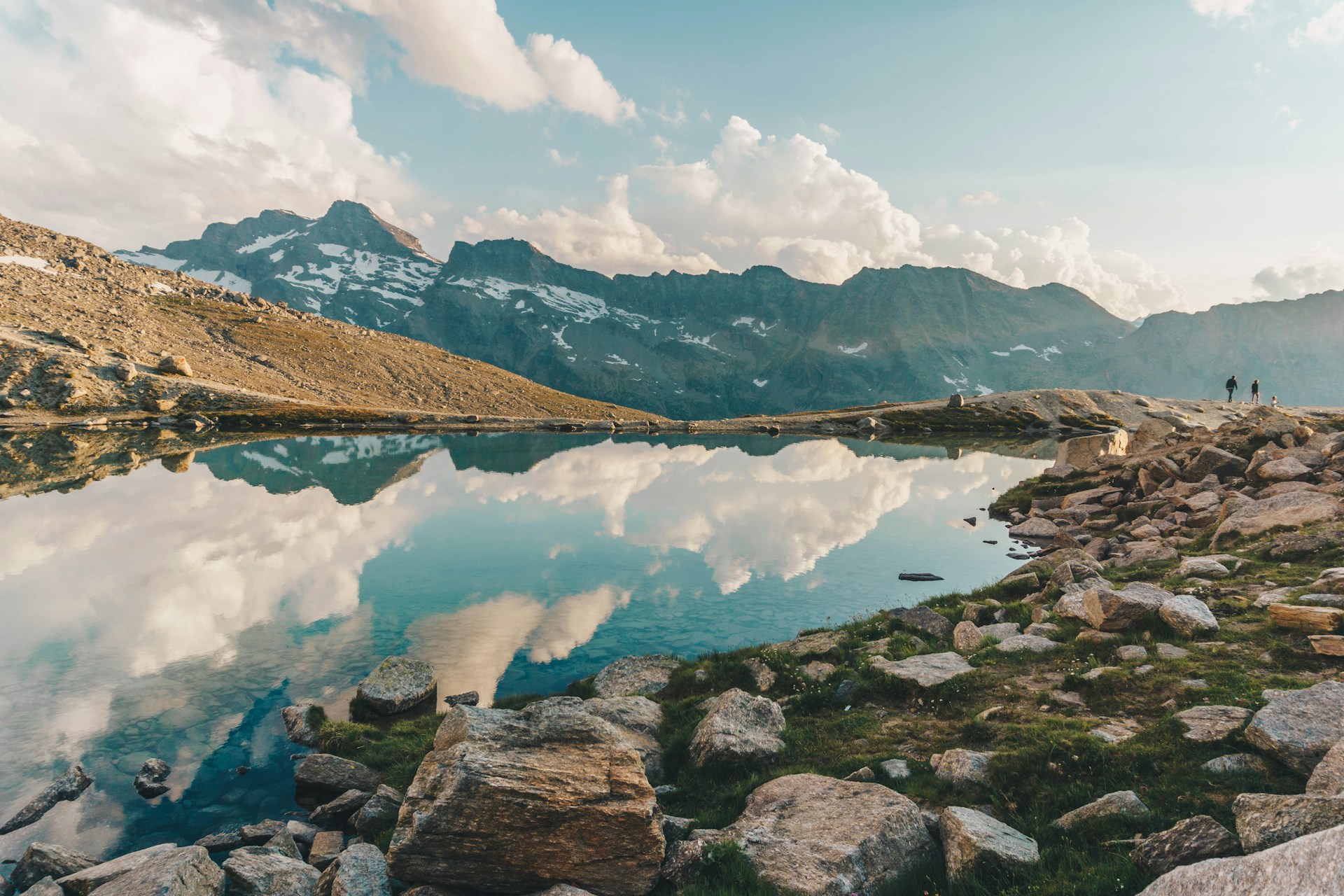
The Italian Alps feel different.
They are not only defined by peaks and trails, but by how closely mountain life is connected to culture, food, and daily rhythm. Villages feel lived-in. Landscapes feel expressive. Time moves with a certain ease.
For travelers, the Italian Alps are less about precision and more about experience.
A Landscape Shaped by Contrast
The Italian Alps combine dramatic terrain with softness.
Sharp peaks rise above green valleys. Vineyards and forests transition into high alpine environments. Light changes quickly, adding depth and variation throughout the day.
For visitors, this creates:
- Strong visual contrasts between regions
- A mix of rugged and accessible landscapes
- Constant variation in scenery and atmosphere
The mountains feel dynamic, not uniform.
Villages Rooted in Daily Life
In the Italian Alps, villages are not just destinations — they are communities.
Local life remains visible:
- Markets, cafés, and small shops shape daily routines
- Architecture reflects both Alpine and Mediterranean influences
- Traditions continue alongside modern tourism
For travelers, this means:
- A more personal connection to place
- Experiences that feel authentic rather than curated
- A slower, more human rhythm
The region feels inhabited, not staged.
Movement Without Urgency
Compared to other Alpine regions, the Italian Alps often feel less structured.
Routes are clear, but not overly systematized. Infrastructure exists, but does not dominate the experience. Movement feels flexible rather than optimized.
This encourages:
- Slower travel between locations
- More spontaneous decisions
- A focus on enjoyment rather than efficiency
The journey becomes part of the experience.
Food and Atmosphere as Central Elements
What truly defines the Italian Alps is how naturally food and social life are integrated.
Meals are not just breaks — they are highlights:
- Regional dishes reflect both mountain and Italian traditions
- Restaurants and huts emphasize quality and atmosphere
- Time spent eating is part of the rhythm, not separate from it
For travelers, this creates a deeper, more sensory experience of the mountains.
A Region of Diversity
The Italian Alps are not one single identity.
Different areas offer distinct influences:
- Northern regions with stronger Alpine characteristics
- Areas with Mediterranean touches in climate and culture
- Varied languages, traditions, and architectural styles
This diversity adds richness and depth to exploration.
Who the Italian Alps Are For
The Italian Alps suit travelers who:
- Value atmosphere and culture alongside nature
- Prefer a slower, more flexible pace
- Enjoy combining outdoor activity with food and social life
- Seek authenticity over perfection
It is a region that prioritizes experience over structure.
Explore the Italian Alps With an Intelligent Guide
Because the Italian Alps are diverse and less standardized, context matters.
A smart guide helps you:
- Choose regions that match your travel style
- Navigate routes without overplanning
- Adapt to weather, timing, and local rhythm
Instead of optimizing every step, you experience the mountains more naturally.
The Italian Alps are not about doing more.
They are about feeling more — through landscape, culture, and time.