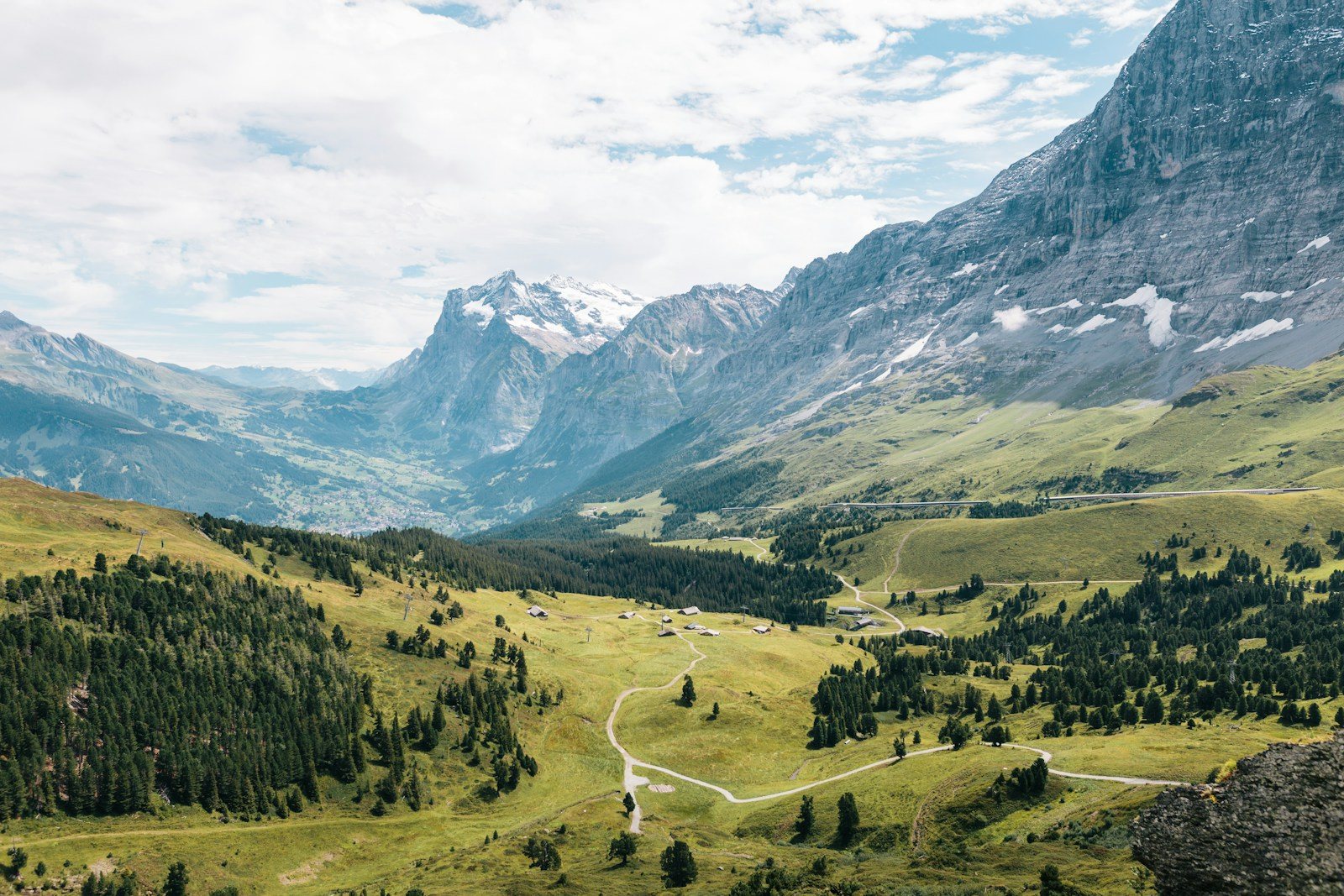
The Alps are one of the most important mountain systems in Europe — both geographically and culturally.
Stretching across multiple countries and shaping climate, travel, and lifestyle, they form a continuous mountain arc that connects Western, Central, and Southern Europe.
For travelers, the Alps are not just a destination.
They are a multi-country mountain world with many identities.
Where the Alps Are Located
The Alpine region spans across eight countries, each contributing a different character:
- 🇫🇷 France
- 🇨🇭 Switzerland
- 🇮🇹 Italy
- 🇦🇹 Austria
- 🇩🇪 Germany
- 🇸🇮 Slovenia
- 🇱🇮 Liechtenstein
- 🇲🇨 Monaco (small Alpine influence / foothills region)
Together, they form a continuous mountain chain stretching from the Mediterranean basin to Central Europe.
Key Facts About the Alps
The Alps are one of Europe’s defining natural systems:
- Length: ~1,200 km (west to east)
- Highest peak: Mont Blanc (~4,810 m)
- Covers: ~200,000 km²
- Population: ~14 million people live in Alpine regions
- Countries: 8 nations share the range
Despite their size, the Alps are highly diverse — geographically, culturally, and linguistically.
A Region of Contrasts
One of the most interesting aspects of the Alps is how different each region feels.
Even though the mountains are continuous, the experience changes dramatically depending on where you are:
- Switzerland → precision, infrastructure, premium travel
- Austria → tradition, hospitality, mountain culture
- France → scale, adventure, refined access
- Italy → atmosphere, food, emotional landscapes
- Germany → accessible, scenic, cultural landscapes
- Slovenia → compact, natural, hidden-gem feeling
- Liechtenstein → quiet, intimate, minimal tourism
The Alps are not one experience — they are many.
How the Alps Shape Travel
The Alps are one of the most important tourism regions in the world.
They offer:
- Hiking and trekking
- Skiing and winter sports
- Scenic rail journeys
- Alpine road trips
- Mountain villages and cultural tourism
- Photography and nature travel
Few regions combine infrastructure and natural beauty at this scale.
Summer vs Winter Alps
The Alps transform dramatically with seasons:
☀️ Summer
- Hiking and high-altitude trails
- Green valleys and alpine flowers
- Lakes and panoramic viewpoints
- Longer daylight and open routes
❄️ Winter
- Ski resorts and snow-covered villages
- Frozen landscapes and glacier views
- Cozy mountain culture
- High-altitude sports tourism
Each season offers a completely different experience.
Why the Alps Are So Diverse
Three main factors shape the diversity of the Alps:
1. Geography
Steep variations in altitude create microclimates and different ecosystems.
2. Culture
Multiple languages and traditions overlap across regions.
3. Infrastructure
Some areas are highly developed (like Switzerland), while others remain more natural or rural.
This combination creates one of the most varied mountain systems in the world.
Who the Alps Are For
The Alps attract a wide range of travelers:
- first-time mountain visitors
- experienced hikers and climbers
- luxury travelers
- family vacationers
- photographers
- road trip explorers
- adventure seekers
There is no single “Alps experience” — only different ways of exploring them.
Planning an Alpine Trip
Because the Alps span multiple countries and climates, planning matters.
Key factors include:
- region selection
- altitude and difficulty level
- seasonal timing
- transport access
- weather variability
Even small choices can significantly change the experience.
Explore the Alps With an Intelligent Guide
A smart Alpine guide helps travelers:
- choose the right country and region
- match routes to experience level
- optimize timing and weather conditions
- combine multiple Alpine destinations into one trip
Because the Alps are not a single destination — they are a system of experiences.
The Alps are not defined by borders.
They are defined by connection — between countries, landscapes, and ways of traveling.